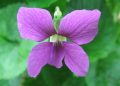


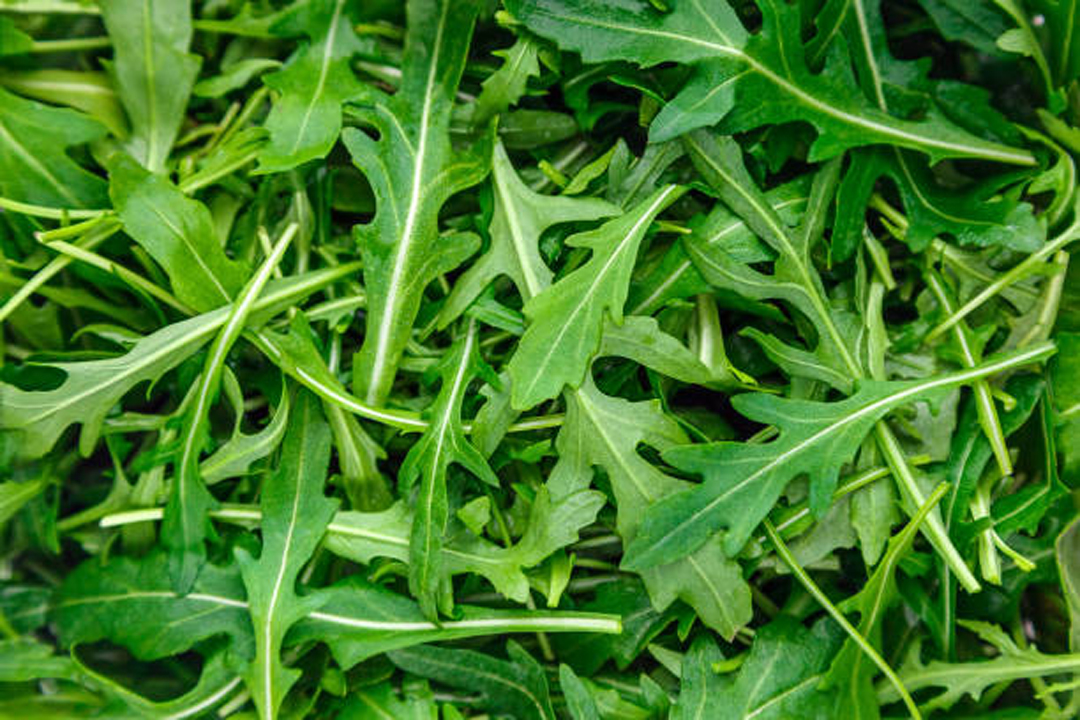
It is easy to confuse salad rocket, Eruca sativa, with sweet rocket, Hesperis matronalis; they are part of the same family and both are referred to as rocket, although each is grown for different reasons. Salad rocket becomes a branched plant bearing spear-shaped leaves that have an unusual mustard flavor with a distinctive musky under¬ tone; Culpeper calls it rocket cress or garden cress. The small blooms open in mid- to late summer, according to climate, and are creamy yellow, or pale white with purple streaks. Salad rocket is often called arugula. Other names are ruchetta and roquette. Sweet rocket is a biennial and produces white, purple, or variegated scented flowers which can be single or double, the double kind being purple or white.
History and mythology
A native of the Mediterranean regions and Western Asia, salad rocket was cultivated by the Romans and is still widely used in Italy, France, and Egypt. Salad rocket is now considered an indespensable salad herb in many countries. In the past, references to salad rocket have been made by various herbalists. One writes that after the Great Fire of London ‘young rockets were seen everywhere among the ruins.” This was possibly wild rocket (E. vesicaria).
Single or double-flowering rocket (H. matronalis), also known as night-scented stock, is native to Southern Europe. It is valued for the blossom’s exquisite evening perfume. The handsome double whites are greatly sought after. It is said that the species H. tristis, from Hungary, has the best perfume. Sweet rocket’s scent is almost absent during the day. Once, when the language of flowers was well known to lovers because of chaperones and lack of private conversation, every bloom in a posy had a message. Sweet rocket meant deceit, since it gives out a beautiful evening perfume but is scentless during the day. Other names given to sweet rocket by the Ancients are dames violet and hesperis or vesper flower.
Cultivation
In spring or autumn (fall) sow seed of salad rocket into shallow drills where the plants are to grow. The soil should be rich and moist for rocket to produce big, healthy leaves. Keep the plant watered in dry weather. Rocket is often seen growing wild, but the cultivated herb has larger, milder tasting foliage.
Sweet rocket seeds can be sown in spring into shallow drills in boxes and planted out in semi-shade when big enough to handle. The soil should be rich and moist. If preferred, sow seed straight into drills in the prepared ground where the plants are to remain. Do not let plants dry out. It has been recommended that any young, green growths at the base of double-flowering stems can be removed and replanted to produce flowering plants the following year.
Harvesting and processing
When the leaves of the salad rocket are big enough, begin to pick them from the outside of the plant. Young leaves are particularly tender. Gather leaves repeatedly until the plant begins to flower. When the petals have fallen allow seeds to ripen and harvest them for resowing in spring or autumn (fall).
Sweet rocket is grown for its perfumed flowers. Harvest the seed in the same way as for salad rocket. Culpeper says if wishing to harvest for medicinal purposes, “the whole plant is collected when in flower, dried and powdered.”
Various uses
Culinary
Leaves of salad rocket are excellent on their own with a light vinaigrette dressing. Both young and mature leaves can be mixed with other salad herbs like corn salad (lamb’s lettuce), mustard cress, and French sorrel for a salad of interesting contrasts in flavors and textures. Greengrocers often keep a mixture of various kinds of lettuce and edible flowers with the addition of some or all of the herbs mentioned previously, calling this attractive assortment “mesclun.” Sweet rocket’s foliage may be used in salads before the plant flowers, although it has been described as being “very acrid in taste.”
Recently, one chef has experimented with rocket leaves as a base for a pesto blend, instead of the classic basil leaves. He explains his preference by saying that rocket does not oxidize and darken like basil, and the rocket gives a spicy mustard flavor to the pesto. He recommends spreading this blend onto cold meats.
Medicinal
The fresh young leaves and stalks of salad rocket are a health food and are described as being a tonic and mild stimulant for the disgestive system. Sweet rocket leaves should be eaten before the plant flowers, otherwise their medicinal content is too high. The dried plant was administered in very small quantites in water for the prevention of scurvy.
Cosmetic
As yet neither salad or sweet rocket appears to have any contribution to make in the cosmetic field.
Companion planting
When in bloom, sweet rocket attracts honey bees and butterflies to the garden, even though the flower’s perfume is not released until evening.