
Plants
    • Home
    • Bulbs
    • Medicinal Plants
    No Result
    View All Result
    • Home
    • Bulbs
    • Medicinal Plants
    No Result
    View All Result
    Plants
    No Result
    View All Result

    Aconite

    Rhizome by Rhizome
    March 2, 2023
    in A-Z
    0
    Aconite

    Thanks to:

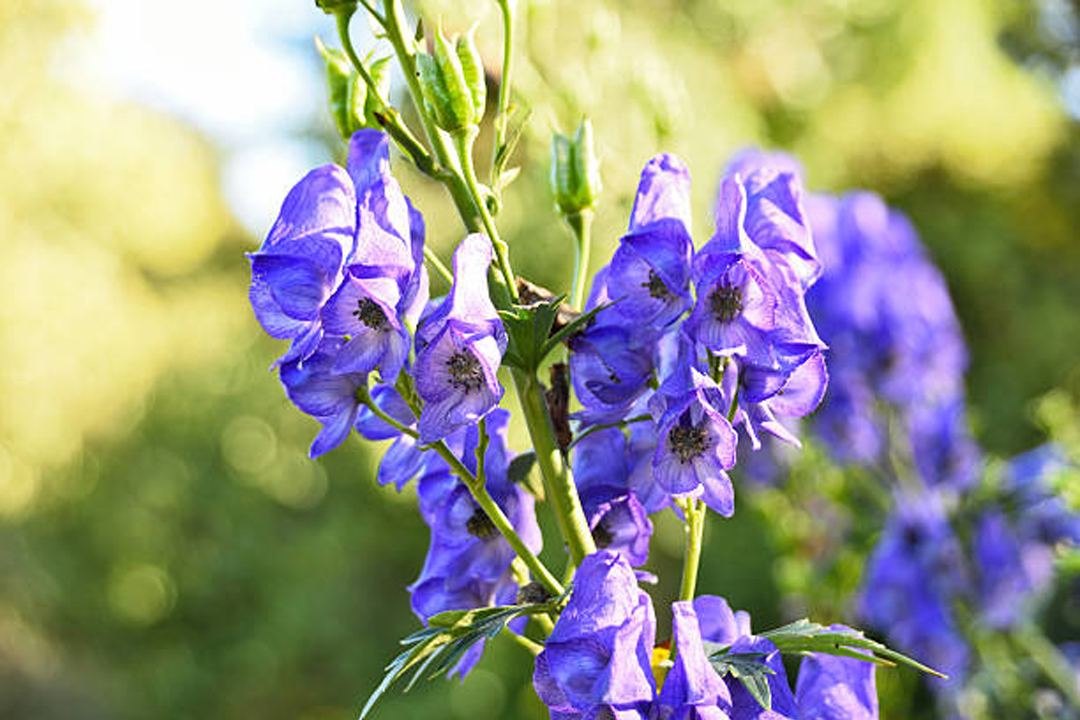
    The helmet-shaped inky-blue flowers give this hardy herbaceous perennial a slightly sinister appearance appropriate to its properties. It has tuberous roots and delphinium-like foliage from which the flowering stems rise to a height of 1.5 m (5 ft).

    History and traditions

    The generic name is from the Greek for a dart (akontion) in recognition of its one time use as an arrow poison, but the species name, napellus, meaning “little turnip”, is supposedly for the shape of the roots, and gives no hint of the deadly nature of this plant. The popular name, monkshood, describes the curious shape of the flowers, while the common name for A. lycoctonum, wolf’s bane, is a reference to its ability to dispatch this once much-feared animal by sprinkling the juice over raw meat as bait. Stories of the dangers of aconite abound in herbals through the ages, such as Gerard’s account of the “ignorant persons” of Antwerp who were taken with “most cruel symptoms and so died” when served the leaves in a salad as a “lamentable experiment”.

    Related species

    There are about 100 species, all of which are highly poisonous. A. lycoctonum has yellow, sometimes purple, flowers and A. carmichaelii, syn. A. fischeri, is sometimes used in Chinese medicine as a painkiller.

    Uses

    Medicinal

    The alkaloid, aconite, gives it toxicity. As a strong sedative and painkiller, it should be used only by qualified practitioners. A very small dose causes numbness of lips, tongue and extremities and can lead to vomiting, coma and death.


    Previous Post

    Lamb’s lettuce

    Next Post

    Calamus

    Next Post
    Calamus

    Calamus

    Leave a Reply Cancel reply

    Your email address will not be published. Required fields are marked *

    Recent Posts

    Common Changes in the woman’s body after childbirth and how to manage them.

    Common Changes in the woman’s body after childbirth and how to manage them.

    March 20, 2023
    Ginger

    Ginger

    March 16, 2023
    Chaste tree

    Chaste tree

    March 16, 2023
    Sweet violet

    Sweet violet

    March 16, 2023
    Greater periwinkle

    Greater periwinkle

    March 16, 2023
    Vervain

    Vervain

    March 16, 2023
    Mullein

    Mullein

    March 16, 2023

      We don't provide medical advice or make any recommendations regarding specific health concerns via this website. Information provided in this content is for educational purposes only and should not replace the advice of a qualified healthcare professional. It is crucial to consult with a physician or other healthcare provider before starting any nutrition, supplement or lifestyle program, especially if you are currently taking any medications. The responsibility for any health consequences resulting from following the information in this educational content lies with the individual reader, and neither freeflowerbulbs.com nor the publisher assumes any liability.


      © 2023 www.freeflowerbulbs.com

      No Result
      View All Result

        We don't provide medical advice or make any recommendations regarding specific health concerns via this website. Information provided in this content is for educational purposes only and should not replace the advice of a qualified healthcare professional. It is crucial to consult with a physician or other healthcare provider before starting any nutrition, supplement or lifestyle program, especially if you are currently taking any medications. The responsibility for any health consequences resulting from following the information in this educational content lies with the individual reader, and neither freeflowerbulbs.com nor the publisher assumes any liability.


        © 2023 www.freeflowerbulbs.com