
Plants
    • Home
    • Bulbs
    • Medicinal Plants
    No Result
    View All Result
    • Home
    • Bulbs
    • Medicinal Plants
    No Result
    View All Result
    Plants
    No Result
    View All Result

    Betony

    Rhizome by Rhizome
    March 15, 2023
    in Acidic Soil, Clay Soil, Full, Herbaceous Perennial, Loamy Soil, Neutral Soil, Partial, perennial, Perennial, Purple, Red, Sandy Soil, Summer, Wildflower
    0
    Betony

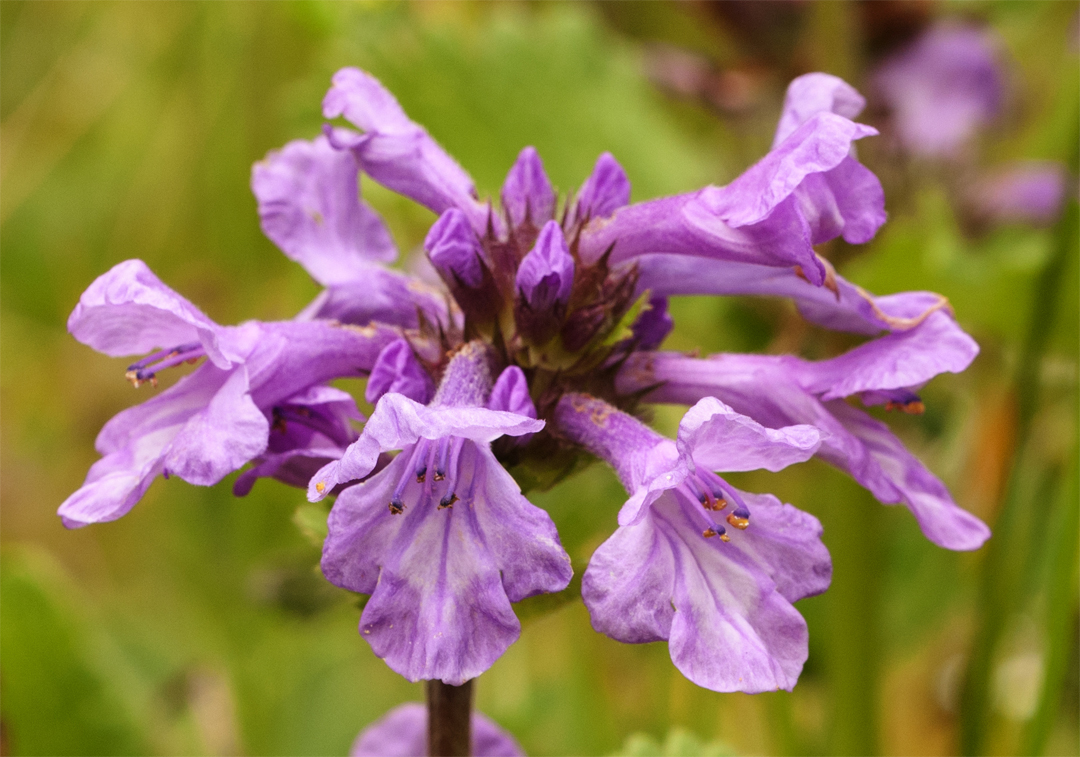
    A mat-forming, hairy, hardy perennial, it has a basal rosette of wrinkled, ovate leaves with dentate margins. Flower stems rise to 60 cm (2 ft.) with smaller opposite leaves and dense, terminal spikes of magenta-pink two-lipped flowers borne in summer.

    History and traditions

    Betony was highly prized as a medicinal herb in Roman times, when Antonius Musa, physician to the Emperor Augustus, wrote a treatise on its virtues, assigning 47 remedies to it. It was of great importance to the Anglo-Saxons for its magical as well as its medicinal properties and is mentioned in the 10th-century manuscript herbal, the Lacuna. It was made into amulets to be worn against evil spirits, planted in churchyards and held to be capable of driving away despair. The Herbal of Apuleius (c. AD 400) describes betony as “good for a man’s soul or his body”. Betony was much valued throughout Europe, and inspired the Italian proverb “sell your coat and buy betony”. It was always associated with treatments for maladies of the head and said to be a certain cure for headaches a use that it retains today in modern herbal practice. The name betony derives from vettonica, as the Romans knew it, which became betonica (as it was until recently classified). Stachys is from the Greek for a spike or ear of corn and refers to the shape of the flower cluster.

    Related species

    Stachys byzantina syn. Stachys lanata is popularly known as “lambs’ ears”, “lambs’ “won lugs”, “lambs’ tails” or “lambs’ tongues” for its white, woolly foliage. It forms a mat of whitish green, soft, downy, wrinkled leaves with short mauve flower spikes to 45 cm (18 in) tall. Although it has no medicinal or culinary properties it is grown as a herb garden ornamental.

    Habitat/distribution

    Native to Europe, grows on sandy loam in open woods and grassland.

    Growth

    Grow in ordinary, dry soil in sun or partial shade. Propagated by seed sown in spring or by division during dormancy.

    Parts used

    Leaves, flowering stems fresh or dried for infusions, ointments and lotions.

    Uses

    Medicinal

    Infusions are taken for headaches, especially if associated with anxiety and nervous tension, often combined with Hypericum perforatum and Lavandula. Made into lotions or ointments (often in combination with other herbs) for applying to cuts, abrasions and bruises.


    Previous Post

    Golden rod

    Next Post

    Chickweed

    Next Post
    Chickweed

    Chickweed

    Leave a Reply Cancel reply

    Your email address will not be published. Required fields are marked *

    Recent Posts

    Common Changes in the woman’s body after childbirth and how to manage them.

    Common Changes in the woman’s body after childbirth and how to manage them.

    March 20, 2023
    Ginger

    Ginger

    March 16, 2023
    Chaste tree

    Chaste tree

    March 16, 2023
    Sweet violet

    Sweet violet

    March 16, 2023
    Greater periwinkle

    Greater periwinkle

    March 16, 2023
    Vervain

    Vervain

    March 16, 2023
    Mullein

    Mullein

    March 16, 2023

      We don't provide medical advice or make any recommendations regarding specific health concerns via this website. Information provided in this content is for educational purposes only and should not replace the advice of a qualified healthcare professional. It is crucial to consult with a physician or other healthcare provider before starting any nutrition, supplement or lifestyle program, especially if you are currently taking any medications. The responsibility for any health consequences resulting from following the information in this educational content lies with the individual reader, and neither freeflowerbulbs.com nor the publisher assumes any liability.


      © 2023 www.freeflowerbulbs.com

      No Result
      View All Result

        We don't provide medical advice or make any recommendations regarding specific health concerns via this website. Information provided in this content is for educational purposes only and should not replace the advice of a qualified healthcare professional. It is crucial to consult with a physician or other healthcare provider before starting any nutrition, supplement or lifestyle program, especially if you are currently taking any medications. The responsibility for any health consequences resulting from following the information in this educational content lies with the individual reader, and neither freeflowerbulbs.com nor the publisher assumes any liability.


        © 2023 www.freeflowerbulbs.com