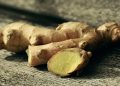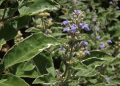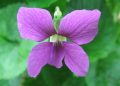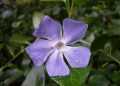


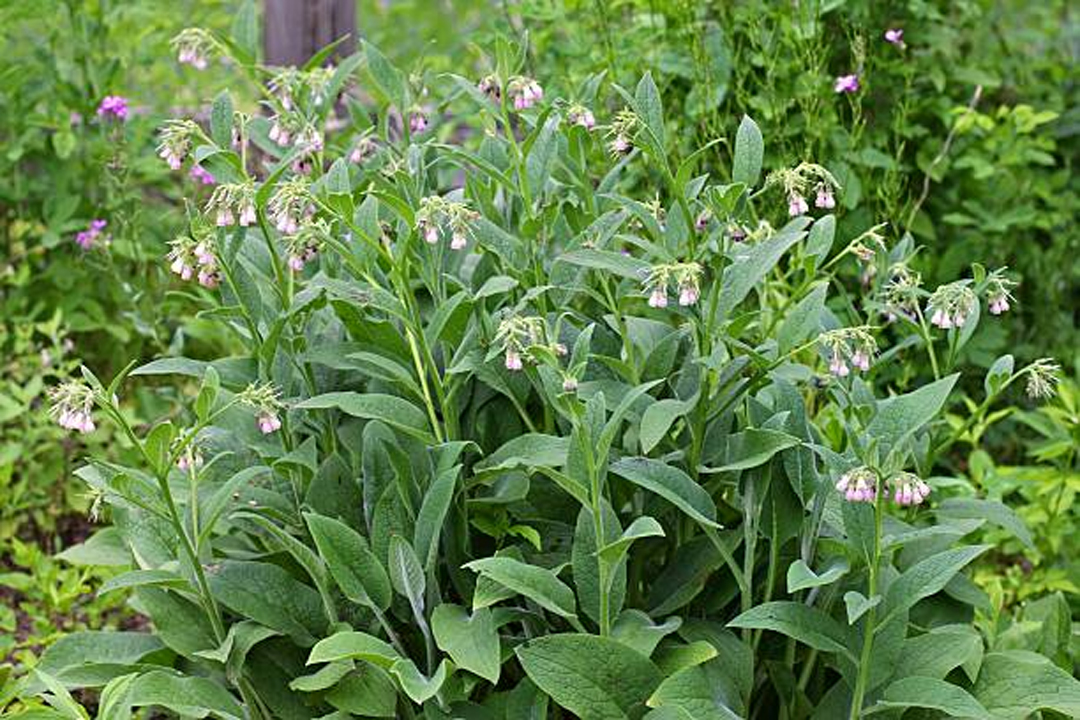
There are several varieties of comfrey, the most common being the officinale, the kind described here. Comfrey belongs to the same family as borage, and there is a similarity in their appearance, although the hairs covering comfrey’s stalks and foliage are much finer than the rough bristles of borage. Comfrey grows to 4 feet (1.20 m) high, and is perennial. A thick-set, bushy plant, the outside leaves can measure 2 feet (60 cm) long and 8 inches (20 cm) wide. The mauve flowers droop in bell-like clusters at the tip of the plant and are in bloom for most of the summer.
History and mythology
Comfrey originally came from Europe and Asia. A variety known as prickly comfrey was highly regarded in the Caucasus as a fodder plant for animals. Historically it has been known amongst country folk for hundreds of years as a wound-healing plant, and in the Middle Ages was a well-known remedy for broken bones. Gerard, a famous herbalist of a bygone age, wrote:
“A salve concocted from the fresh herb will certainly tend to promote the healing of bruised and broken parts.”
Cultivation
For propagating, sow the seeds in spring and again in autumn (fall) where the climate is temperate in a well-prepared bed, preferably under spreading trees. Keep moist while the seeds are germinating. When the plants are a couple of inches high, thin them out.
Watch particularly for snails and caterpillars, which, if not controlled, can shred the leaves of even fully grown plants to a fine lace. Increasing by root division is carried out in autumn (fall), leaving at least 2 feet (60 cm) each way when planting. The roots are persistent and any little piece left in the soil will shoot.
Harvesting and processing
Comfrey roots and leaves should be harvested as required, as they are more effective when fresh. If this is not possible, select unblemished leaves, lay them on racks, or on paper, in an airy place until crisp, then crumble coarsely and pack into airtight containers. For the roots, dig the required amount for storage, wash, and dry out in an airy place.
Various uses
Culinary
Herbalists maintain that comfrey leaves are wholesome as a food. The large, outside foliage is rather coarse, so pluck only the succulent, young leaves which have a cucumber taste and a delicious texture. Coat the young leaves in batter, fry them in oil, dust with salt and pepper, and serve as a vegetable. Gently steam the chopped leaves and eat them like spinach, or add a few chopped leaves to spinach during cooking. Put some leaves into the juice extractor together with any vegetable for an extra-nutritious drink.
Medicinal
The leaves and roots of comfrey have long been a country remedy for sprains, bruises, and wounds when made into poultices and applied to the affected parts. An infusion of the leaves or roots has been given successfully for chest colds, for the circulation, and for the intestines. The old name of “knit bone” or “boneset” was given to comfrey because it helps broken bones to mend more quickly. We have a skiing friend who applied comfrey poultices to a broken limb (he drank the tea as well) and to the astonishment of the doctors, his recovery was hastened by six months. The leaves and roots are rich in mucilage a glutinous substance. They also contain a beneficial element called allantois, as well as tannin and some starch.
Cosmetic
Comfrey cream, or comfrey ointment, is soothing and healing for the skin, and is especially helpful when applied overnight for wrinkles under the eyes. Comfrey tea helps cleanse the blood stream and clear the complexion. Comfrey leaves in a facial steam help tired and aging skins.
Companion planting
Comfrey is closely related to borage, and is helpful in much the same way if a few plants are grown near a strawberry bed to improve the size and flavor of the berries. Comfrey leaves are an excellent addition to the compost heap. A liquid fertilizer made from large, old comfrey leaves which have been left to rot in water and then broken down with more water and applied to the roots of plants has been found helpful (Esther Deans’ Gardening Book).