
Plants
    • Home
    • Bulbs
    • Medicinal Plants
    No Result
    View All Result
    • Home
    • Bulbs
    • Medicinal Plants
    No Result
    View All Result
    Plants
    No Result
    View All Result

    Rhubarb

    Rhizome by Rhizome
    March 14, 2023
    in Acidic Soil, Full, Herb, Loamy Soil, Partial, Perennial, Red, Spring, White
    0
    Rhubarb

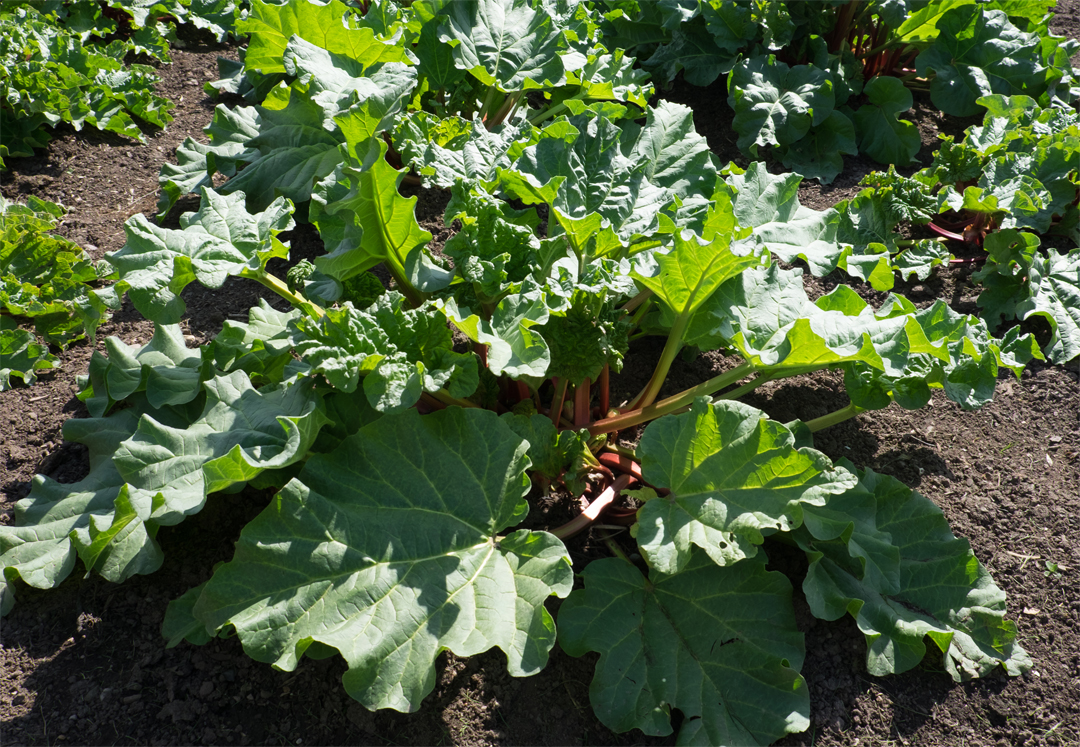
    A large hardy perennial, to 2 m (6 fat), on a thick rhizome, with a basal clump of palmate lobed leaves. Spires of reddish-green flowers arise on long, hollow stems in summer.

    History and traditions

    Rhubarb has been an important medicinal herb in China for many centuries. It is mentioned in the Shen Nong Canon of Herbs, dating from 206 scan 23, though claims exist that it has been recorded in much earlier Chinese texts, dating from 2700 sc. Several species of rhubarb (there are 50 in the genus) were used, but R. palmatum is thought to be the main source of Chinese medicinal rhubarb. The plant was first grown in Europe in 1763. R. officinale, also medicinal and of Chinese origin, came to Europe, as a plant, in 1867. However, rhubarb in dried or powdered form had been known for centuries before that in the West. It was imported to ancient Greece, where they called it rha-barbarum because it was brought by traders from the barbaric regions beyond the river Rha (Volga). It reached Europe in the 13th century and was in demand as a purgative drug, which lacked the side effects of other more toxic products, remaining popular into the 20th century. Rhubarb powder was a major constituent of the 19th-century proprietary medicine, Gregory powder, named after the Scottish doctor who patented it. And in an article in The Lancet, 1921, it is cited as a certain, even “magical”, remedy for dysentery, when administered in small, strictly controlled amounts.

    Related species

    Edible garden rhubarb is from hybrids, developed during the 19th century, of R. rhabarbarum syn. R. rhaponticum, and there are now many cultivars. It is slightly laxative, but does not have medicinal properties.

    Habitat/distribution

    Native to China and northeast Asia, found on deep, moist soils at altitudes of 3,000—-4,000 m. Introduced elsewhere in temperate zones.

    Growth

    Requires rich, moist soil and a sunny situation. It is possible to propagate from seed, but division of roots in spring or autumn is the preferable method. Cultivars must be propagated by division.

    Parts used

    Rhizomes dried for use in decoctions, powders and medicinal preparations.

    Uses

    Medicinal

    Used in very small doses for diarrhoea and gastric upsets, and in larger doses for chronic constipation. Also given for liver and gall bladder complaints.


    Previous Post

    Oak

    Next Post

    Sorrel

    Next Post
    Sorrel

    Sorrel

    Leave a Reply Cancel reply

    Your email address will not be published. Required fields are marked *

    Recent Posts

    Common Changes in the woman’s body after childbirth and how to manage them.

    Common Changes in the woman’s body after childbirth and how to manage them.

    March 20, 2023
    Ginger

    Ginger

    March 16, 2023
    Chaste tree

    Chaste tree

    March 16, 2023
    Sweet violet

    Sweet violet

    March 16, 2023
    Greater periwinkle

    Greater periwinkle

    March 16, 2023
    Vervain

    Vervain

    March 16, 2023
    Mullein

    Mullein

    March 16, 2023

      We don't provide medical advice or make any recommendations regarding specific health concerns via this website. Information provided in this content is for educational purposes only and should not replace the advice of a qualified healthcare professional. It is crucial to consult with a physician or other healthcare provider before starting any nutrition, supplement or lifestyle program, especially if you are currently taking any medications. The responsibility for any health consequences resulting from following the information in this educational content lies with the individual reader, and neither freeflowerbulbs.com nor the publisher assumes any liability.


      © 2023 www.freeflowerbulbs.com

      No Result
      View All Result

        We don't provide medical advice or make any recommendations regarding specific health concerns via this website. Information provided in this content is for educational purposes only and should not replace the advice of a qualified healthcare professional. It is crucial to consult with a physician or other healthcare provider before starting any nutrition, supplement or lifestyle program, especially if you are currently taking any medications. The responsibility for any health consequences resulting from following the information in this educational content lies with the individual reader, and neither freeflowerbulbs.com nor the publisher assumes any liability.


        © 2023 www.freeflowerbulbs.com