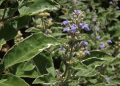


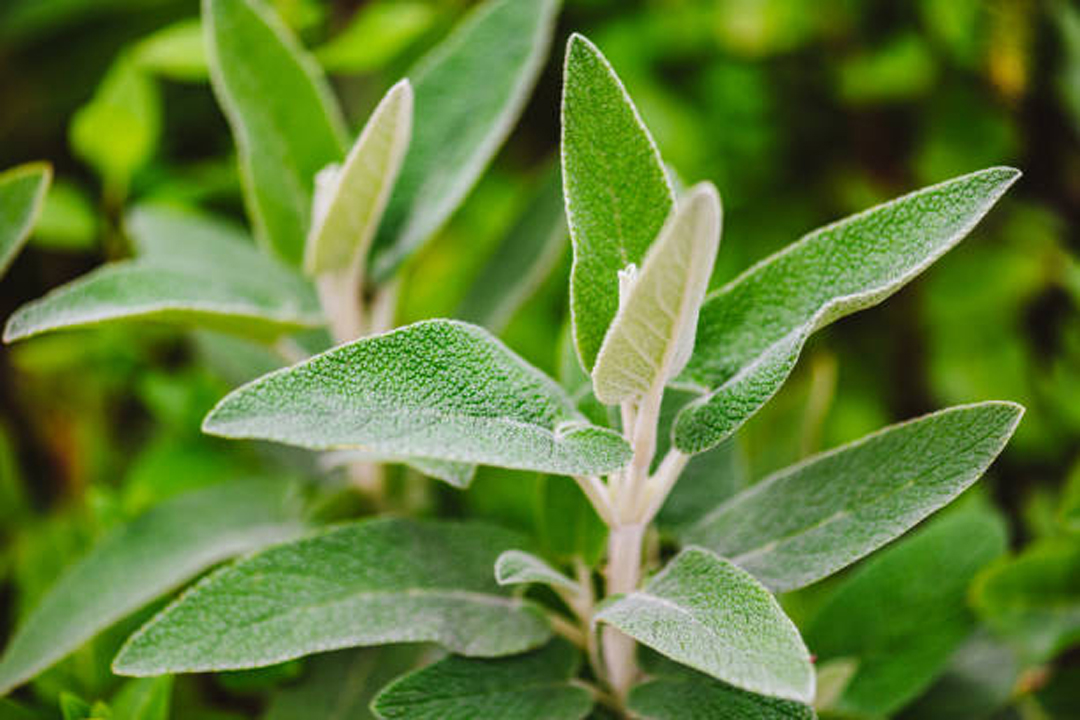
A sage bush in the garden is a most attractive sight as well as being very useful. The aromatic, silver-gray leaves are approximately 3 inches (8 cm) long and ½ inch (12 mm) across. However, when they first appear they are pale green, then as the leaves mature and harden they turn gray. Bees are fond of the purple, lipped flowers which start blooming on long stems in the autumn (fail), and sometimes in spring. It has been said that when the flowers open, each one resembles a tiny lion’s mouth that drinks in the fire of the sun, the plant’s chemistry transforming it into an aromatic volatile oil that courses through it.
History and mythology
Sage originated from the northern shores of the Mediterranean. It has been cultivated for culinary and medicinal uses for hundreds of years in England, France, and Germany. In later years it was taken to America, and later still to Australia. The name of the genus is derived from the Latin saluere, to be saved, referring to the curative powers of the plant. An old tradition was to plant rue amongst valuable sage plants to keep away noxious toads. Sage was also believed to assuage grief, and in Pepys’ Diary he notes the planting of sage on graves in a country churchyard. One of its earliest reputations was as a preventative against the onslaughts of old age: “He who would live for aye must eat sage in May” is an old English proverb. The ancient Egyptians used sage medicinally as a brain tonic.
The Chinese valued it for the same reason.
Cultivation
To propagate from seed, sow in spring (in mild climates autumn (fall) sowing is also possible in a prepared seed box).
When seedlings have reached a height of 4 inches (10 cm) plant them out, leaving 2 feet (60 cm) between each one in a well-drained and sunny position that is also elevated if possible. Water the plants well while they are young. When sage becomes an established plant, water only in dry weather as it will not thrive if conditions are too damp. It is most noticeable that plants with gray leaves do not usually like wet feet or moist conditions. When propagating from cuttings, use 6 inch (15 cm) long new shoots after the leaves have hardened and become gray; this happens in late spring, or possibly earlier, according to the season. Plant out when cuttings have developed roots.
Harvesting and processing
Harvest sage for drying just before the plant flowers. A successful method is to hang loosely bundled long sprays tied together in a cool, airy place. The branches may also be laid out on racks to dry in a warm position, but never in direct sunlight. When dry and brittle, pull off all the leaves and store in airtight containers immediately, as it is unwise to leave the bundles, attractive though they are, to gather dust. By the way, it is important when cutting sage at any time, to prune out any dead twigs and branches, as the plant can become very woody as it grows older. Fresh sage leaves may also be chopped finely, put into ice cube trays, covered with water and allowed to freeze. It will keep for many months like this. When needed, either drop a sage cube into the food you are cooking, or allow to thaw and then use.
Various uses
Culinary
Sage leaves, whether fresh or dry, counteract the richness in certain foods while assisting the digestion. Use sage on its own, or with other herbs, when cooking pork, goose, duck, veal, and oily fish. It goes into pea soup, bean soup, and vegetable soup. Cook sage with onions, eggplant, tomatoes, cheese dishes, egg dishes, rich cream sauces, breads, dumplings, and biscuits (scones). Sage is a necessary ingredient in mixed herbs, along with thyme and marjoram.
Medicinal
Sage is believed to restore energy and bad memory, and is known to be helpful to the digestion, having a tonic effect on the liver. Sage tea is still taken today as a nerve tonic, and is recommended as a regular beverage for people who are studying for examinations and need to rely on their memory. This herb has also long been known to be beneficial for the mouth and throat, and is still included by some manufacturers in mouthwashes and gargles. In olden days the leaves have been used for tobacco, for tea, in cheeses, and breads. Because of its antiseptic properties it was used as a strewing herb on floors to keep away unwanted insects and vermin.
Cosmetic
Sage is still used in some commercial hair tonics to prevent hair from going gray. A simple old method for whitening teeth was to rub a fresh sage leaf over them each day. Sage is also used in recipes for cleansing lotions for the skin, in deodorants, hair rinses, and for large pores, in setting lotions, and in neck creams.
Companion planting
In the garden, sage and rosemary aid one another. Sage also helps to repel cabbage butterfly and improve the flavor and digestibility of cabbages if grown amongst them.