

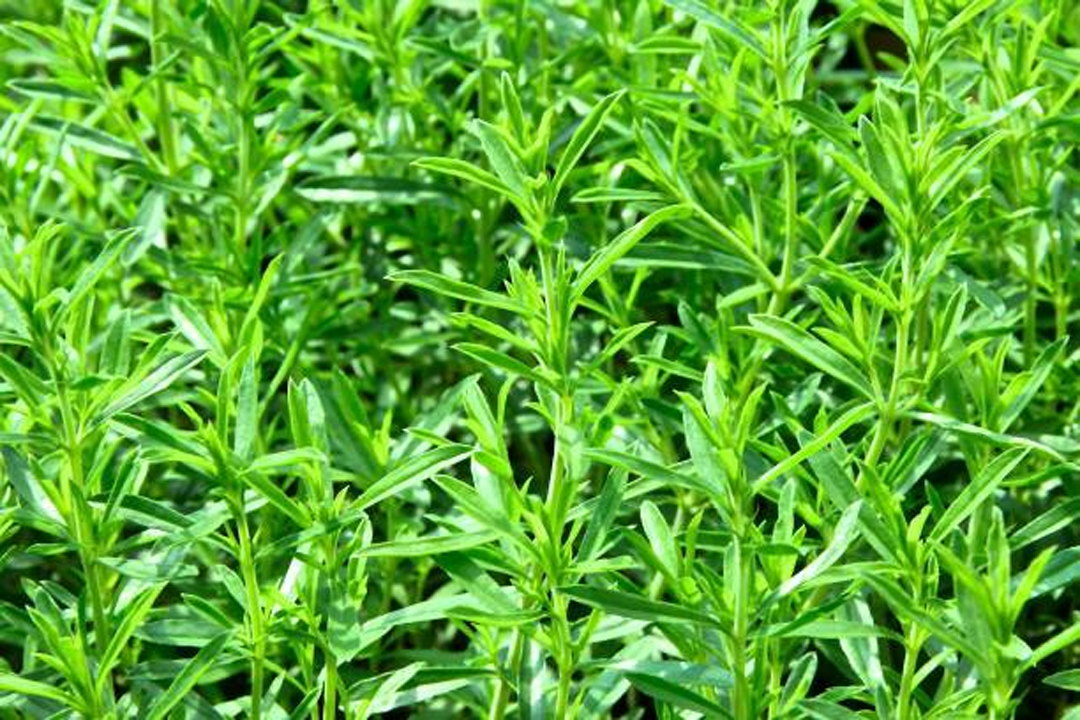
Of these two varieties, winter savory is more popular with home gardeners because it is a perennial. The bush is compact with a rather stiff appearance, making it ideal for low hedges to surround small, formal herb beds. The tiny, lipped, white flowers bloom in late summer and autumn (fall). The glossy, green leaves are thin and narrow, and are approximately ½ inch (12 mm) long. The leaves of summer savory are longer and softer and are a bronze green color, while the pale pink flowers bloom at the same time as winter savory. The growth habits of the two types are different. Summer savory has slender, erect stems which snap easily and the flavor is stronger than winter savory, which makes it more satisfactory for drying. Most commercial growers prefer it for this reason, and also because the seed can be scattered over large areas with good results in germination. There is a lesser known form of winter savory, S. repandens, a decorative prostrate variety whose leaves are smaller and lusher and the white flowers more thickly clustered than those of upright winter savory. However, because of its matted, close form, it is difficult to gather the leaves for culinary use. It spreads in dense, cushiony mounds, making it a desirable plant for filling pockets in rustic paved paths and terraces and in dry stone walls. It is also suitable for planting in hanging baskets, as the low, horizontal habit of the tiny branches will fall over the rim and hang down.
History and mythology
The savories are native to the Mediterranean countries and their history goes back to the remotest times. They were introduced to Britain by the Romans, and later they were among the first herbs taken to the New World by the Pilgrim Fathers. Their botanical name of Satureia is linked with the satyrs of mythology. Virgil wrote in ancient times that it was amongst the most fragrant of herbs and recommended that it should be grown near bee-hives. Savory vinegar (the leaves steeped in vinegar for some weeks to flavor it) was popular with the Romans. Shakespeare mentions savory several times in his plays:
“Here’s flowers for you;
Hot lavender, mints, savory, marjoram.”
The Winter’s Tale.
Winter savory, when kept neatly clipped, looks attractive as a low hedge to outline knot gardens and was a favorite plant in Tudor days for this purpose.
Cultivation
To propagate winter savory, seed may be sown in spring (and again in autumn (fall) in temperate climates) in a prepared seed box, the seedlings to be planted out in a sunny, well-drained position when big enough to handle. Another method is to take small tip cuttings of new growth in late spring when the leaves have hardened, then put them in a pot of wet sand until roots have formed. When setting out in the garden, allow 12 inches (30 cm) between plants. If growing savory as a hedge, put the plants closer together, about 8 inches (20 cm) apart.
Harvesting and processing
Both savories can be dried with good results by hanging them in bunches in an airy place just before flowering. When leaves are crisp-dry, they are easily separated from the stalks by running the thumb and forefinger up and down the stems. Stored in airtight containers, the flavor will remain strong for a long time. For freezing winter savory, wait for the new soft growth in spring and summer. Summer savory, with its soft foliage, may be frozen at any time. Strip the leaves from their stalks, then chop them finely, mix with a little water, and put them into ice cube trays in the freezer. Sprays of fresh winter or summer savory may be wrapped in foil and frozen. It will keep like this for some weeks. Savory butter freezes well, too.
Various uses
Culinary
Both winter and summer savory are used in the same way in food. The finely chopped or dried leaves go with all kinds of cooked beans, either with a little melted butter or in a cream or white sauce. Mix the fresh or dried herb with breadcrumbs for coating fish, pork, and veal fillets before frying. It flavors seafood sauces and cocktails and lentil, pea, and bean soups. Use savory instead of pepper whenever a pepper flavor is needed.
Medicinal
Winter and summer savory both have strong beneficial properties, and they were once used medicinally for treating colic, flatulence, giddiness, and respiratory troubles. Summer savory tea is recommended as one of the herbs to help purify the system. In cooking, both savories help digest many foods, especially leguminous vegetables, in particular all varieties of the bean family. Hence its popular German name of bohnen-kraut, meaning “bean herb.” The sharp, hot taste of the leaves has also earned it the name of “pepper herb,” and it is worthwhile noting that it may be used instead of pepper in the diet where this is desirable.
Cosmetic
Either savory has a tonic and stimulating effect on the skin and may be infused in a muslin or cheesecloth bag in a hot bath for this purpose. An infusion of summer or winter savory freshens the mouth and sweetens the breath. As summer savory tea helps cleanse the system, it has been recorded that it also improves the complexion, making it clear and fresh.
Companion planting
It has been noted that savory seeds inhibit the germination of other seeds when planted nearby. Summer savory is helpful to onions when grown in a border around them. Both summer and winter savories help beans to grow better in the vegetable garden, (as well as being the traditional herb to eat with them). If you are stung by a bee while working in the garden, an old cure is to rub the spot with fresh savory leaves after removing the sting. Honey bees are attracted in swarms to savory when it is in bloom.