

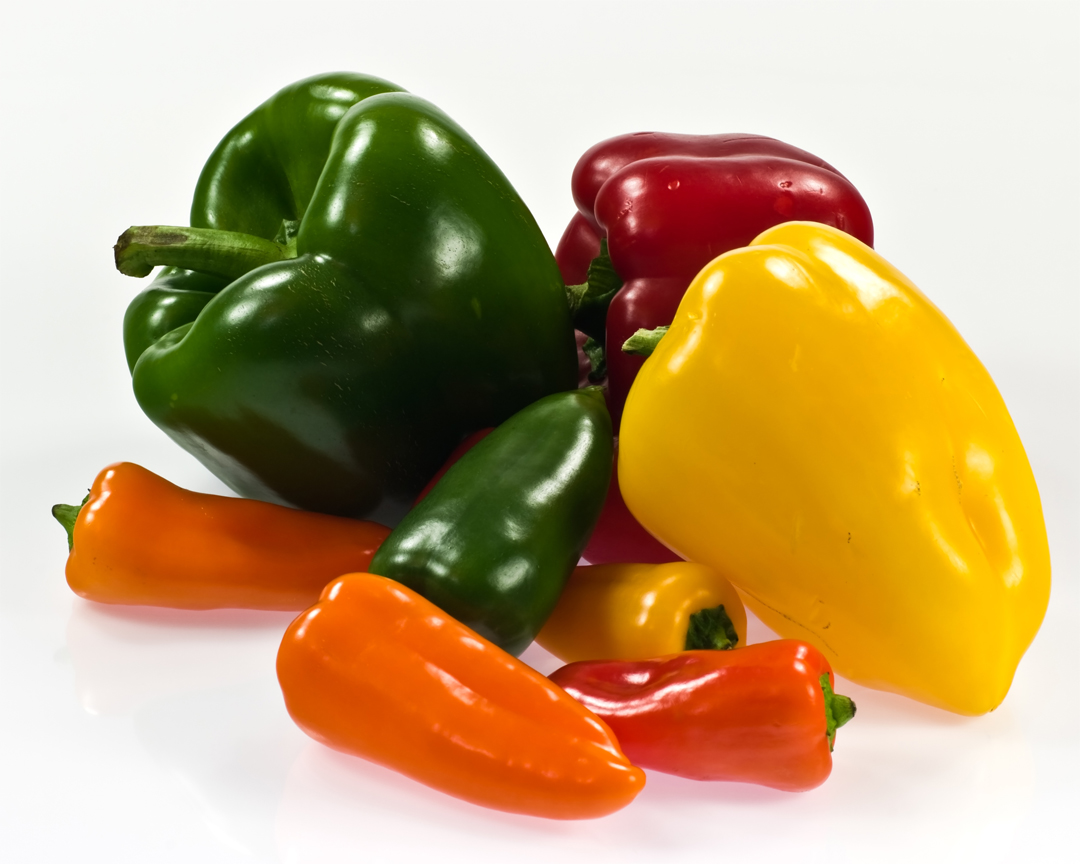
Capsicum annuum var. annuum are annuals, sometimes short-lived perennials, and most grow into small bushy plants 60—90 cm (2-3 ft.) high; a few may reach 1.5m (5 ft.). They have glossy lance-haped to ovate leaves and small white flowers followed by conical, or spherical, green, ripening to red, fruits.
History and traditions
Capsicums were first brought to Europe and the West from Mexico following Columbus’s voyage of 1492, when he doctor who accompanied him noted their uses by the Native Americans as pain relievers, toothache remedies and for flavoring food. The Portuguese were responsible for their spread to India and Africa.
Culinary
Sweet red or green peppers make delicious cooked vegetables or raw salad ingredients. Hot chili peppers are added to pickles and chutneys; dried to make cayenne pepper, chili powder or paprika (from milder tasting fruits); added to dishes in Indian, Mexican, Thai and other worldwide cuisines.
Species
Most cultivated peppers are of the species C. annuum var. annuum. There are over 1,000 cultivars grown across the world, with fruit in a wide range of shapes, sizes and degrees of pungency, divided into five main groups:
- Cerasiforme Group (cherry peppers) — with small, very pungent fruits.
- Conoides Group (cone peppers) — with erect, conical fruits.
- Fasciculatum Group (red cone peppers) — slender, red, very pungent fruits.
- Grossum Group (bell peppers, sweet peppers, pimento) — these have large, sweet, bell-shaped fruit, green, then ripening to red or yellow. Rich in vitamin C, they lack the medicinal properties of the hot, pungent peppers.
- Lon gum Group (cayenne peppers, chili peppers) — fruits are usually drooping, very pungent and the source of chili powder, cayenne pepper and hot paprika. C. frutescent is a name often used for varieties of C. annuum whose fruits are used in Tabasco sauce.
Growth
Frost-tender plants, which must be grown under glass in cool temperate climates. Plant in loam-based (John Innes) growing medium (soil mix), water freely, feed with a liquid fertilizer once a week and mist flowers with water daily to ensure that fruit sets. Propagation is from seed, at a temperature of 21°C (70°F) in early spring. Outside, they are grown in well-drained, nutrient-rich soil.
Uses
Medicinal
It is the bitter alkaloid, capsaicin, which gives peppers their hot taste and has been established by modern research as an effective painkiller it works by depleting the nerve cells of the chemical neurotransmitter which sends pain messages to the brain.
Peppers are antibacterial and also contain vitamins A, C, and mineral salts. Pungent varieties increase blood flow, encourage sweating, stimulate the appetite and help digestion. In tropical countries they are useful food preservatives and help prevent gastric upsets. Taken internally or used as gargles (infusions of the powder) for colds, fevers and sore throats; applied externally (in massage oil or compresses) for rheumatism, arthritis, aching joints and muscles. A pharmaceutical analgesic cream, with capsaicin as active ingredient, has recently been developed for reducing rheumatic pain.