

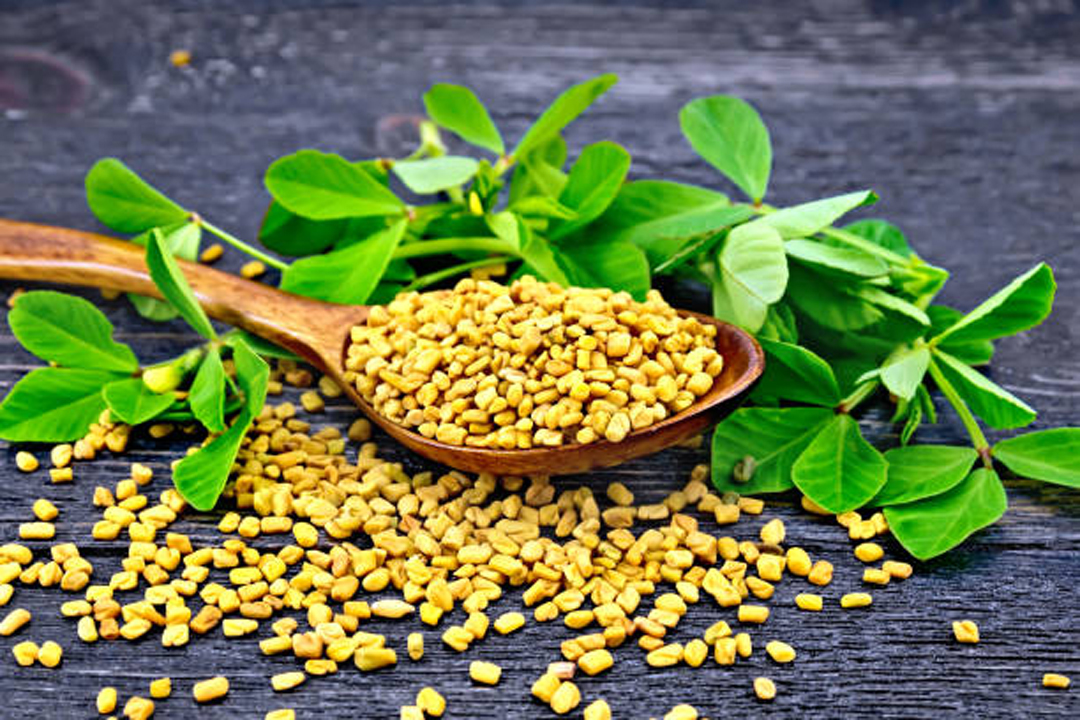
Fenugreek (sometimes spelt “foenugreek”) is a small, slender, annual herb of the pea family, similar in habit to lucerne (alfalfa). It has light green leaves that are trifoliate; each leaflet is oblong and less than an inch (about 2 cm) long. The flowers are yellowish-white and are followed by typical legume fruits that contain the small, furrowed, golden-brown seeds. These release a strong, sweet scent, and are spicy and rather bitter to the taste.
History and mythology
Fenugreek is indigenous to western Asia and south-eastern Europe. It is one of the oldest cultivated plants, having been mentioned in medical papyri from ancient Egyptian tombs. Charlemagne encouraged its cultivation in central Europe in the 9th century. The herb was also a favourite of the Arab peoples. The Latin name Trigonella means little triangle, a reference to the shape of the small flowers. Foenum-graecum means “Greek hay”, the name given to the plant by the Romans when they brought it from Greece. It is also called “bird’s foot,” “cow’s horn,” and “Greek hayseed.” Fenugreek is cultivated commercially in India and the Middle East.
Cultivation
Sow the seed in spring in the open ground, sprinkling it into narrow furrows after raking and moistening the oil. Choose a sunny position. Keep watered while the herb is growing.
Harvesting and processing
The leaves may be picked when large enough, for culinary use. The fresh leaves can be chopped finely, mixed with a little water and frozen in ice-cube trays. If growing for the seed, the plants will mature three to five months after sowing. Allow the plant to flower and fruit; when pods are ripe collect them as the first few seeds fall from them. Snip off the heads and spread them out on a tray in a dry place. When completely dry, the seeds can be shaken from the pods. They should be stored in airtight containers.
Various uses
Culinary
In India, aromatic fenugreek leaves, called “methi ka saag,” are used as a vegetable and as a flavoring for curries. They are an important ingredient in tandoori marinades. They are also torn up, or left whole, and mixed into a green salad to give a tang to the palate while toning the system. The seeds (“methi ka beej”) are included in curry blends, especially the distinctive vindaloo. In Egypt fenugreek leaves are used as a food flavoring. Sprouts can be grown from the seed, following the same procedure as for alfalfa and other small seed legumes. These sprouts can be added to salads, sandwiches, or eaten on their own with a little oil and lemon dressing. To use leaves which have been frozen in ice cubes, drop about 4 into vegetable soups during the last 30 minutes of cooking.
Fenugreek leaves are used in several Iranian dishes. One specialty is a delectable appetizer consisting of a mixture of fresh herbs: they are usually fenugreek, parsley, garlic, chives, tarragon, coriander, mint, and watercress. The herbs are washed, broken up, and crisped in the refrigerator; then they are attractively arranged on a plate. Diners select these herbs buffet-style and eat them with cubes of feta cheese placed on flat bread which is then folded. In Iranian fenugreek’s name is “shambalileh.”
Medicinal
Fenugreek’s fresh leaves, sprouted seed, and the seed itself have tonic properties. Fenugreek is principally a cleansing, soothing herb. The crushed seeds make a health-giving tea, acting on the liver and intestinal tract, assisting the removal of stale and excess mucous from the body. To reduce the bitter flavor of this tea, add honey and a teaspoon of lime or lemon juice.