

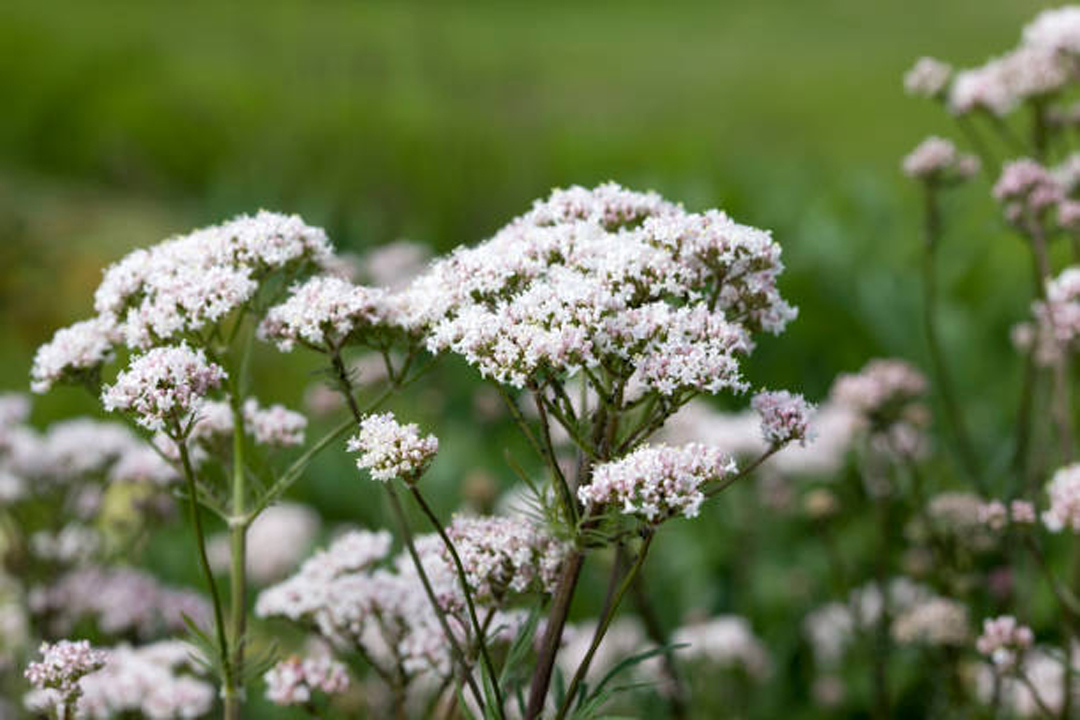
The valerian used widely in herbal medicine should not be confused with any garden-type valerian, one of which is a popular and decorative small plant with little therapeutic value. It has pinkish red, fluffy blooms clustering at the top of the stems. The true “great” valerian, a tall plant grown for its medicinally important rootstock, can reach a height of 5 feet (1.5 m). The green leaves are oval, “cut” at intervals, and proceed in pairs along narrow stalks. The summer-flowering blooms are pale pink to white, scented, and grow in flat clusters. The rootstock, which is the only part used, has a strong, earthy smell.
History and mythology
Valerian is native to Europe and parts of Asia. Those distinguished recorders of herbal knowledge from long ago, Dioscorides and Galen, wrote of the powerful medicinal properties found in the root system of the plant they named “Phu” because of its strong smell! Later, scholars were sure they referred to the herb which became known as valerian. It was widely used by Arabian physicians in the 10th century, and by medieval monks, esteemed healers of the sick, who distilled the potent essences from the roots. Valerian has retained its reputation as a relaxing and soothing herb, and in some places still retains its country names of “all heal,” “capon’s tail,” “great wild valerian,” or “set wale.”
Cultivation
Sow valerian seed in prepared seed boxes in spring, and when plants are big enough to handle, set them about 12 inches (30 cm) apart in a moist, shady position. Dig some manure into the soil first. The roots may be divided and planted out in spring and autumn (fall) in rich, moist soil, at least 12 inches (30 cm) or more apart. Keep new plants watered, as their favorite places in the wild are damp hedgerows, ditches, and wet ground.
Harvesting and processing
Cut flowering tops of valerian as soon as they begin to appear so that the rootstock may develop better. In autumn (fall) the green, leafy tops are cut away and the roots and rhizomes (root-stock) dug and collected. Any clinging soil is brushed away, then the roots are thoroughly dried and stored in airtight containers. However, it is advised to be cautious in using home-grown valerian, as root-drying for medicinal purposes is a lengthy and complicated process which must be expertly managed so that there are no ill effects from this powerful natural drug. It is important to know how harvesting and processing valerian root- stock takes place, even though growing it in the herb garden is mainly for your own interest, knowledge of the plant, and pleasure. Also you can enjoy the flowers instead of removing them.
Various uses
Culinary
Valerian has no culinary use these days, although in the Middle Ages some dried root was sometimes put into a “broth or pottage” for health reasons.
Medicinal
Preparations made from valerian roots are used in herbal medicine as a sedative, for easing neuralgic pain, muscular cramps and spasms, and various nerve-related conditions. Those with liver problems could feel nauseated when taking valerian because it increases the flow of bile; if this happens do not carry on. We can vouch for its ability as a sleep-inducing tea when wakeful during the night. By the way, the tea has a fairly strong “earthy” taste, liked by some and disliked by others. A suggestion in this case is to mix lemongrass tea with the valerian to offset any aversion to the flavor; the two blend happily together and will not cancel out each other’s effectiveness. Respect the value of valerian tea and do not take it in large quantities.
Cosmetic
A soothing herbal bath to promote “beauty sleep” is to put together in a muslin or cheesecloth bag (knotted together at the top if you like) some valerian, chamomile, and lavender, and infuse in a hot bath. Afterward, sip a cup of valerian tea (sweetened with honey if wished) and see how naturally sleepy you feel!
Companion planting
Valerian stimulates phosphorus activity in the soil and is excellent as a border plant for the vegetable garden. It attracts earthworms also. In bio-dynamic composting (a highly specialized and successful type of organic gardening) valerian is one of six herbs specially prepared to influence the fermentation of composts and manures. Stinging nettle grown as a companion plant increases the essential oil in valerian plants.