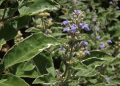


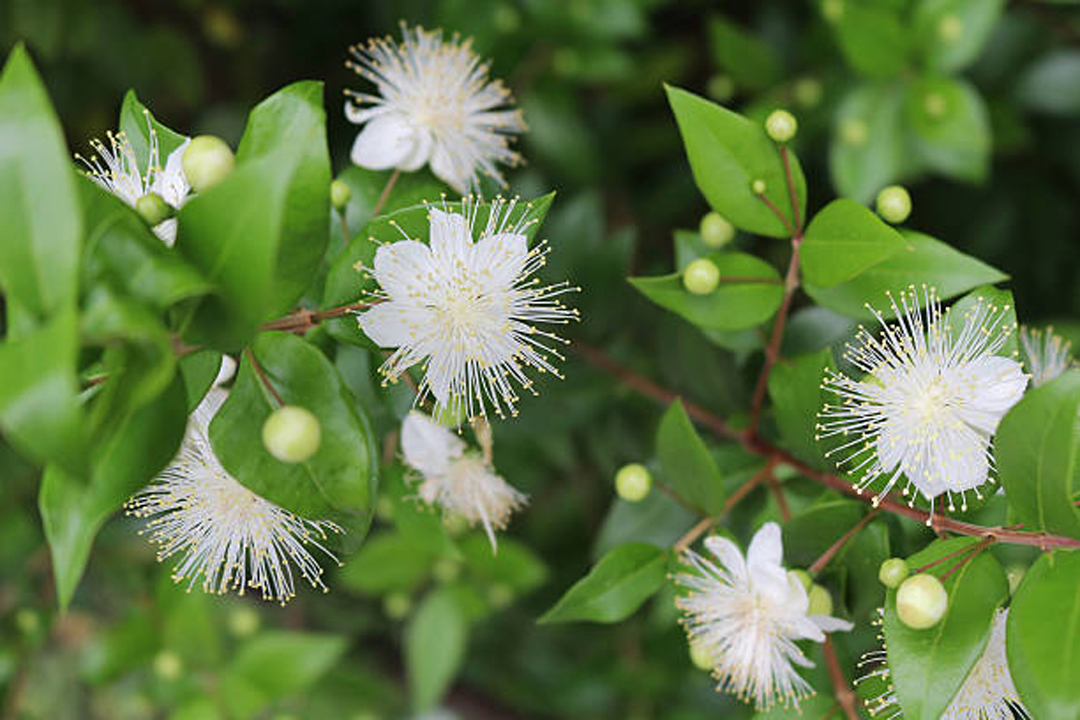
Myrtle is a compact, evergreen shrub usually growing to 10 feet (3 m) high, but sometimes taller. The small, oval leaves are pointed, glossy and sweetly scented. The plant bears perfumed blooms in mid-to late summer: each tiny five-petalled white flower is almost hidden by prominent gold stamens; the tightly folded white buds burst into flower in a day. This plant should not be confused with the crepe myrtle (Lagerstroemea indica).
History and mythology
The myrtle was assigned to Aphrodite (Venus) the goddess of love, so not surprisingly has a reputation for being an aphrodisiac. It is mentioned in the Old Testament, and in Greek and Roman manuscripts. It has a double symbolic link with the idea of love, being connected with both fidelity and immorality. Myrtle as a symbol of the first quality is included in an Israeli bride’s wedding bouquet.
Cultivation
Myrtle grows wild in its native Mediterranean regions and in western Asia. It is propagated by taking woody cuttings in summer. Divide the wood into 5-7 inch (12-15 cm) pieces, trim off any side shoots, and press each piece into a deep pot of river sand, leaving one-third of the wood exposed at the top. Water well. When the cuttings have made strong roots, plant out. If wishing to grow from tip cuttings, take them in late spring to early summer; trim the stem of foliage, allowing several leaves to remain at the top, then insert into river sand and continue in the same way as for hardwood propagation. Seeds are sown in spring in prepared trays, as described in the section on growing from seeds. When plants are large enough and have a good root system, put in the ground as either single specimens, or as a hedge. Myrtle needs a well-drained, medium-rich soil in a sunny position. Nourish with fertilizer from time to time and water in dry weather. Myrtle can be clipped to make an evergreen dense hedge, looking most attractive when covered with its white, perfumed flowers. The blossoms are followed in late summer by berries which turn blue when ripe.
Harvesting and processing
The fragrant fresh leaves are picked for culinary use. The fresh flowers may be gathered for culinary use also. When the petals have dropped, the fruit begins to form, and gradually turns blue. Pick the berries when they appear and air-dry on a gauze rack or on sheets of paper in a warm, dark place. When completely dry, store in an airtight jar. Grind in a pepper-mill, or crush in a mortar and pestle just before using.
Various uses
Culinary
Myrtle leaves are used in their native Mediterranean countries to flavor roasted meats and game birds. The cooked meat is wrapped in the leaves, or the cooked birds are stuffed with leaves for five to ten minutes before serving. Where myrtle grows wild, or branch trimmings are collected after pruning, they can be burnt in a barbecue to give fragrance to meat while cooking. A few of the gently resinous flowers can be strewn over green salads or fruit salads, or used as a garnish for desserts. The dried fruit when ground makes a peppery seasoning with an interesting aroma.
Medicinal
A decoction is made from the leaves by some herbalists, for application to external bruises.
Cosmetic
Myrtle has been valued since before Biblical times. Dried, powdered leaves made a dusting powder for babies in the Orient. The Greeks and Romans chewed myrtle berries to freshen the breath.