

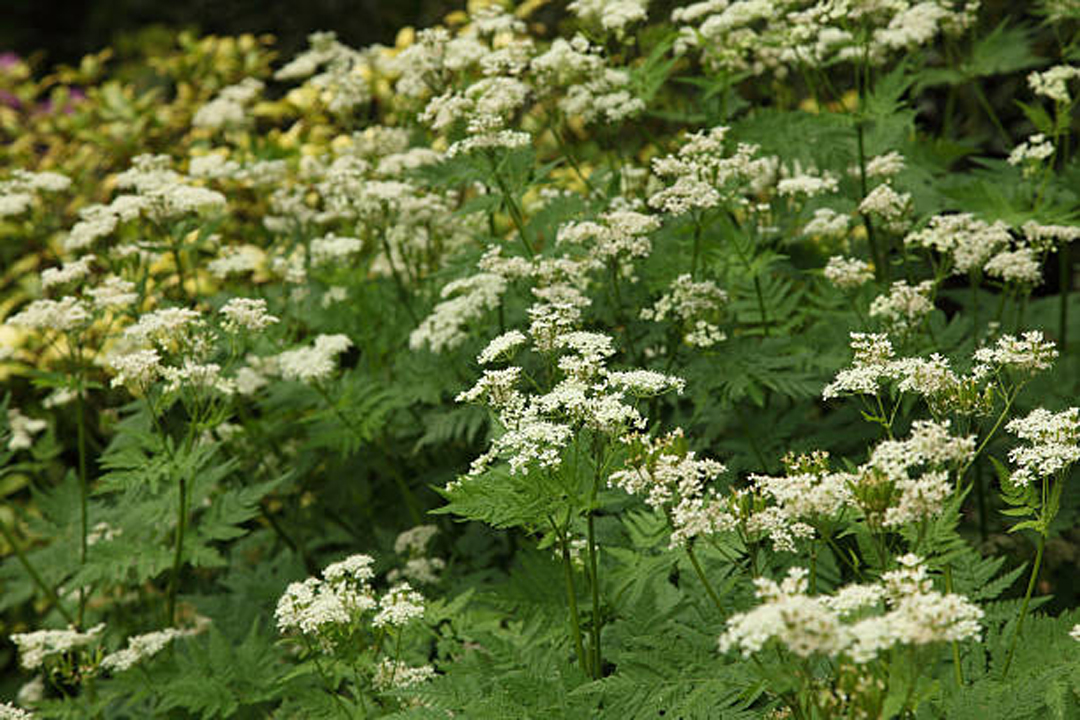
A European native, sweet cicely is one of the tall, stately herbs, reaching a height of 2-5 feet (60-150 cm) when grown in the right position, and is so ornamental when in flower that it is often included in a herbaceous border. It has been said that if “lavender is the queen of herbs, sweet cicely is surely the princess.” The large, ferny leaves have a silky texture and are covered in a soft down, verdant green on top but paler underneath. The foliage has a sweet, warm, anise taste and grows from thick, hollow, and branching stems. In spring white umbels of frothy flowers cover the plant and attract honey bees. The seeds are long and dark brown.
History and mythology
Dioscorides, the Greek, wrote a great deal about herbs, describing them in detail. He first used the name “Seseli,” and this is how cicely is pronounced. The strong scent of the foliage, traditionally smelling of myrrh, is responsible for its botanical name, Myrrhis, meaning perfume, and odorata for fragrance. The common prefix, sweet, refers to the plant’s delicious aroma. Old-fashioned names for it are fern-leaved chervil or giant sweet chervil, although it is a much bigger plant in every way than the real chervil. Once, the oil-rich, ripe seeds were gathered for crushing to a powder as a polish for furniture and oaken floors. Culpeper writes of its “pleasantness in salads” and that “it is so harmless you cannot use it amiss”.
Cultivation
Sweet cicely does not like humid areas and will thrive in conditions that are mainly cool. Where climate and soil suit, especially in mountain regions, sweet cicely may spread and become rampant. Choose a well-drained place in semi-shade for the plants, and if the soil is poor, add a little compost. Sow seeds in spring into shallow drills in a box containing fine soil, or sow where the plants are to remain. When large enough, plant out the seedlings. For root division, cut the taproot into sections and replant. This should be done in spring or autumn (fall). Water in dry weather.
Harvesting and processing
The sweet leaves are preferred fresh in salads, but they may be harvested and dried on a flat surface in a shady, cool place for use as a digestive tea. When the flowers have dropped, collect the aromatic, green seed for chopping and using in salads. The ripe seed can be collected for sowing again. You may wish to use ripe seeds like our grandmothers did as a fragrant furniture polish, in which case you should grind the seed to a powder in a blender.
Various uses
Culinary
Most parts of sweet cicely are edible. The leaves, green seeds, and hollow stems are chopped and used in all kinds of salads. The roots when cut up and boiled were once a popular vegetable, especially for elderly people. The hollow stems may be candied like angelica. The finely chopped leaves are excellent to use when cooking sharp fruit like rhubarb to counteract acidity. Use them as a natural sweetening agent in cooling summer drinks.
Medicinal
Sweet cicely’s fragrant leaves are very useful as a sugar substitute for diabetics and are recommended for this purpose. Chop the leaves and green seeds and add them to salads. Steam the leaves like a vegetable and use in soups. In the past, both the leaves and root have been used to alleviate coughs and flatulence. Fresh or dried leaves infused as a tea are taken to strengthen the digestion and the cooked roots have been said to assist the system. The roots were once an ingredient in an ointment for healing wounds and, in earlier times, were preserved and candied and reckoned a good preservative in time of plague.
Cosmetic
As the leaves contain a weak antiseptic, you may like to add a few when preparing a facial steam to give it a pleasing scent as well as helping to cleanse skin eruptions.
Companion planting
The nectar-laden blossoms will bring honey bees to the garden.