
Plants
    • Home
    • Bulbs
    • Medicinal Plants
    No Result
    View All Result
    • Home
    • Bulbs
    • Medicinal Plants
    No Result
    View All Result
    Plants
    No Result
    View All Result

    Pot marigold

    Rhizome by Rhizome
    March 5, 2023
    in Acidic Soil, Alkaline Soil, Annual, Clay Soil, Full, Herb, Loamy Soil, Neutral Soil, Orange, Partial, Red, Sandy Soil, Spring, Summer, Yellow
    0
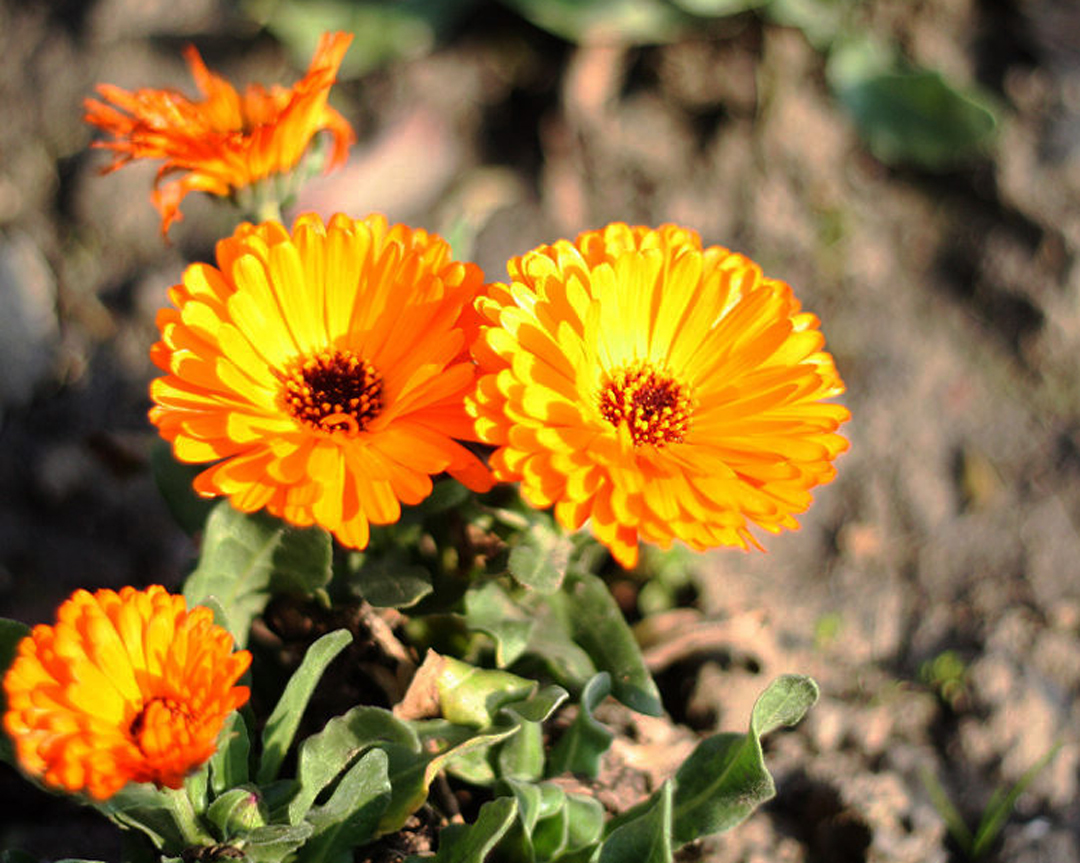
    Pot marigold

    A low-growing annual to 50 cm (20 in) with hairy, slightly sticky leaves and large orange-yellow daisy-like flowers throughout summer into early autumn.

    History and traditions

    This cheerful, familiar flower was valued for its medicinal, culinary and cosmetic properties in early civilizations of both east and west. Calendula is the diminutive of the Latin calendulae and thus “a little calendar or little clock” (Oxford English Dictionary). This ties in neatly with its habit of closing its petals when there is no sun as described by Shakespeare in A Winter’s Tale: The Marigold that goes to bed wi’ the sun And with him rises weeping.

    In medieval England the usual name was simply “gold’s” Chaucer refers to a garland of “yellow gold’s” as an emblem for jealousy and it was only later dubbed “marigold” in honor of the Virgin Mary. Its brightness inspired claims of exceptional virtues from an ability to draw “wicked humors” out of the head (Macer’s Herbal, 15th century), which makes some sense of a fantastical tale in the Book of Secrets of Albertus Magnus, 1560, of how an amulet of marigold petals, a bay leaf and a wolf’s tooth will ensure that only words of peace will be spoken to the wearer. In Tudor times the petals were dried in huge quantities and sold in grocers’ shops to flavor winter stews. They were made into conserves and syrups and also added to salads.

    Culinary

    Once known as “poor man’s saffron”, the fresh or dried petals add rich color to rice dishes and salads and may be sprinkled over sweet dishes or baked in buns and biscuits.

    Related species

    There are a number of hybrids and ornamental cultivars that do not necessarily have the same medicinal value, but may be used for culinary and cosmetic purposes and to add to pot-pourri. The Tagetes genus of marigolds are not related. Many are toxic and should not be used for the same purposes as Calendula.

    Growth

    Easy to grow in any soil. Propagate from seed sown in autumn or spring. Regular dead-heading ensures a good supply of blooms over a long period. Self-seeds prolifically.

    Uses

    Medicinal

    Pot marigold or calendula has anti-inflammatory, antiseptic properties and is also antibacterial and antifungal. It makes an excellent ointment for soothing irritated, chapped skin, eczema, insect bites and sunburn. It may also be made into an infused oil, for the same purpose, by steeping petals in warm vegetable oil.

    Cosmetic

    Petals are added to face and hand creams, or made into an infusion as a lotion for spotty or oily skins.

    Aromatic

    Whole dried flowers, or petals lend color to a fragrant pot-pourri.

    Previous Post

    Calamint

    Next Post

    Cannabis

    Next Post
    Cannabis

    Cannabis

    Leave a Reply Cancel reply

    Your email address will not be published. Required fields are marked *

    Recent Posts

    Common Changes in the woman’s body after childbirth and how to manage them.

    Common Changes in the woman’s body after childbirth and how to manage them.

    March 20, 2023
    Ginger

    Ginger

    March 16, 2023
    Chaste tree

    Chaste tree

    March 16, 2023
    Sweet violet

    Sweet violet

    March 16, 2023
    Greater periwinkle

    Greater periwinkle

    March 16, 2023
    Vervain

    Vervain

    March 16, 2023
    Mullein

    Mullein

    March 16, 2023

      We don't provide medical advice or make any recommendations regarding specific health concerns via this website. Information provided in this content is for educational purposes only and should not replace the advice of a qualified healthcare professional. It is crucial to consult with a physician or other healthcare provider before starting any nutrition, supplement or lifestyle program, especially if you are currently taking any medications. The responsibility for any health consequences resulting from following the information in this educational content lies with the individual reader, and neither freeflowerbulbs.com nor the publisher assumes any liability.


      © 2023 www.freeflowerbulbs.com

      No Result
      View All Result

        We don't provide medical advice or make any recommendations regarding specific health concerns via this website. Information provided in this content is for educational purposes only and should not replace the advice of a qualified healthcare professional. It is crucial to consult with a physician or other healthcare provider before starting any nutrition, supplement or lifestyle program, especially if you are currently taking any medications. The responsibility for any health consequences resulting from following the information in this educational content lies with the individual reader, and neither freeflowerbulbs.com nor the publisher assumes any liability.


        © 2023 www.freeflowerbulbs.com